Objectifs
- Connaitre les fonctions de python
- Etre capable d'écrire des fonctions simples.
Exercice:01
Énoncé
- Vous pouvez visualiser l'énoncé de l'exercice
Solution
# procedure
def table(mul, bornInf, bornSup):

    while bornInf <= bornSup:
        print(bornInf, 'x', mul, '=', bornInf*mul)
        bornInf += 1
# programme principal -----------------------------
table( mul=int(input("Saisir le nombre multiplicateur")),
bornInf=int(input("Saisir le borne Inferieur")),
bornSup=int(input("Saisir le borne Inferieur")))
Exercice:02
Énoncé
- Vous pouvez visualiser l'énoncé de l'exercice
Solution
Exercice:03
Énoncé
- Vous pouvez visualiser l'énoncé de l'exercice
Solution
Exercice:04
Énoncé
- Vous pouvez visualiser l'énoncé de l'exercice
Solution
Exercice:05
Énoncé
- Vous pouvez visualiser l'énoncé de l'exercice
Solution
Exercice:06
Énoncé
- Vous pouvez visualiser l'énoncé de l'exercice
Solution
Exercice:09
Énoncé
- Vous pouvez visualiser l'énoncé de l'exercice
Solution
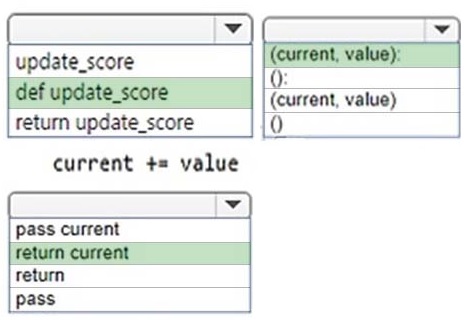
Exercice:10
Énoncé
- Vous pouvez visualiser l'énoncé de l'exercice
Solution
def get_name():
    name = input("quel est votre nom ?")
    return name
def calc_calories(miles, calories_per_mile):
    calories = miles * calories_per_mile
    return calories
distance = int(input(
    "combien de miles avez-vous fait cette semaine?"))
burn_rate = 50
biker = get_name()
calories_burned = calc_calories(distance,burn_rate)
print(biker, ", vous avez brûlé à propos"
      ,calories_burned,"calories.")
Exercice:11
Énoncé
- Vous pouvez visualiser l'énoncé de l'exercice
Solution
def NbcMin(passe):
    nb = 0
    for i in passe:
        if 'a' <= i <= 'z':
            nb += 1
    return nb


def NbcMaj(passe):
    nb = 0
    for i in passe:
        if 'A' <= i <= 'Z':
            nb += 1
    return nb


def NbcAlpha(passe):
    return len(passe)-NbcMaj(passe)-NbcMin(passe)


def longMaj(passe):
    d = 0
    s = 0
    i = 0
    while i < len(passe):
        if 'A' < passe[i] < 'Z':
            s += 1
        else:
            if s > d:
                d = s
                s = 0
        i += 1

    return d


def longMin(passe):
    d = 0
    s = 0
    i = 0
    while i < len(passe):
        if 'a' < passe[i] < 'z':
            s += 1
        else:
            if s > d:
                d = s
                s = 0
        i += 1

    return d


def score(password):
    bonus = (len(password)-NbcMin(password))*3+(len(password) -
     NbcMaj(password))*2+((len(password)-NbcAlpha(password))*5)
    penalites = longMaj(password)*3+longMin(password)*2
    val = bonus-penalites
    if val < 20:
        print('Très faible')
    elif val < 40:
        print('Faible')
    elif val < 80:
        print('Fort')
    else:
        print('Très fort')


pas = "P@SI_promo2016"
score(pas)
Exercice:12
Énoncé
- Vous pouvez visualiser l'énoncé de l'exercice
Solution
limiteInf = int(input("Saisir la limite inférieur : "))
limiteSup = int(input("Saisir la limite supérieur : "))

print("Nombres premiers entre", limiteInf, " et ", limiteSup, " sont :")

for num in range(limiteInf, limiteSup + 1):
   # tous les nombres premiers sont supérieurs à 1
   if num > 1:
       for i in range(2, num):
           if (num % i) == 0:
               break
       else:
           print(num)